Monday, June 05, 2006

Happy Dublin

I spent the long Labor Day weekend (or, simply a bank holiday here in England) in Dublin, Ireland with my friends Margot, Stefanie, and Beth...we had a nice time exploring the city (though I was unusally tired after three weekends away).

We arrived early Saturday morning and set out immediately on the town (after a badly-needed double cappuccino upon arrival given our 7am departure and 5am wake-up call that morning) . We wandered through the lovely St. Stephen's Green (the city's main park) and browsed the colourful food market (lots of gorgeous fruit, cheese, olives, veggies, pies (the meat kind), chocolate, bread, chutneys, etc). We then toured the Guinness (beer) brewery which is really well done. The tour ended, of course, with a complimentary pint of stout in the top floor bar. In the midst of good times and wild conversation that involved a little too much gesturing, Beth spilled half of her beer, which you can see above.

Saturday evening we went for a nice dinner in the trendy neighbourhood of Temple Bar and then tried to pretend we were hipsters by going out to a bar afterward for more drinks and maybe dancing (HA!). But we were all so exhausted given our early rise, we practically fell asleep in our cocktails (tragic). Temple Bar is the cool "going out" neighborhood for the university kids. It's a bit wild -- kinda like Bourbon St. in New Orleans.

Sunday, we had breakfast at the buzzy Bewley's Cafe on Grafton Street (the shopping hub), then we toured the Jameson Whiskey distillery, which also ended in a whiskey tasting (I really do enjoy good whiskey). Margot was selected to do a full taste test at the end, so she was slightly more woozy than the rest of us by the end of the tour. We then toured the Dublin castle and chapel. I also took a stroll around St. Patrick's cathedral -- but Evensong was in progress when I arrived, so I couldn't go in.

We had another good dinner Sunday night, then capped off the evening with cocktails at the fashionable Clarence Hotel, which is owned by Bono and The Edge from the (Irish) band U2. But we didn't see them there, darnit. The hotel has a very interesting decor and vibe -- I call it Elementary School Chic, becuase it kind of had the feel of...well, a posh, made-over elementary school.

Monday we saw the ancient Book of Kells at Trinity College. I was dissapointed though to discover that by the term "illuminated," they do NOT mean that the book lights up (that would have made it much cooler). But I guess it's still pretty amazing and mysterious and everything (the book, authors unknown, chronicles the four Gospels in painstaking illustration, penmanship and detail).

More impressive than the Book of Kells (in my opinion) is the "Long Room" in the Old Library which you walk through after -- a gigantic, lofty wooden library that houses some of the oldest books in Ireland (and the oldest harp in Ireland, which I somehow missed -- Beth told me about it afterwards). It is a gorgeous, majestic room, which has on display many letters, early scripts and books by Ireland's literary pride, Samuel Beckett (behind James Joyce, of course).

After Trinity and the Book of Kells, we all split up and did our own thing for a couple hours. I darted over to the National Gallery of Ireland where I got a brief art fix that included works by John and Jack Yeats, Sarah Purser, and Evie Hone (her stained glass rooster was my favourite). There is a large collection of Italian religious art (always enjoyable) and a few rooms of Carravaggio, but unfortunately, they were closed. Oh well, you can't win 'em all.

We stayed at the very comfy and well-appointed Conrad hotel, which I would definitely recommed -- especially since we got complimentary wine and chocolate in our room for no apparent reason. But hey, whose arguing.

The Crucible: My Faith in Theatre is Officially Restored

What's in a name, you ask? Well, if you're John Proctor from "The Crucible," it's absolutely everything ("because I cannot have another in my life!") By the curtain call of the Royal Shakespeare Company's production on the West End, I found myself on the verge of tears...not just fom the emotion of the play's final scene, but from the sheer mastery of the whole production. The acting, set and direction were flawless. There was not one weak link...all elements lived up to the stellar quality and genius that is Arthur Miller. No wonder the production was awarded 5 stars by TimeOut magazine -- something that hardly ever happens. Let's just say that after seeing a few flops here in London, this production has completely restored my faith in the theatre (oh ya, and the lead, Iain Glen, is totally hot).

The implications of the story reverberate today. A story about the Salem with trials of 1692, it was meant to be an allegory for the McCarthy hearings of the 1950s, of which Miller himself was put on trial 3 years after the play was staged. It still warns against the power of extremism when suspicion alone serves as evidence, and when it becomes more comfortable for a community to buy into hype and hearsay instead of facts and reason.

For some perspective from Arthur Miller himself on why he wrote "The Crucible," check out this essay from a 2002 issue of The New Yorker: http://www.newyorker.com/archive/content/?020422fr_archive02

Bravo!

Wednesday, May 31, 2006

Poem

She called it a picnic on the moon
I suppose she’s right
it may be wrong to be here
as children change
parents grow older
and wars intensify

The not belonging gives me place
brings me peace
floating weightless, free
on a moving sea
sometimes alone but never lonely

I share my blanket with a friend
the blackness illuminated
we look at earth
and think about missing it
wondering if the tether will break
or snap us back from this place

But for now we stay
transfixed by the moment
taking it in
enjoying this feast
and respite on our journey

by Catherine Franklin, May 2006

Thursday, May 25, 2006

Who Eats the Hazelnut Holds the Cup, but gets no Nooooky-Nooooky


No, I have not been drinking and this is not some obscure ancient philosophy (that I know of).

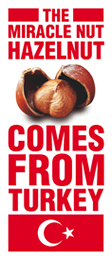
While on the plane returning from Turkey, I came across a peculiar advertisement by the Hazelnut Promotion Group in Skylife, the magazine of Turkish Airlines. It serves as a good reminder for why it is worth hiring a professional translator to make sure your messages come across clearly in other languages.

To view the full text of the ad, click here: www.flickr.com/photo_zoom.gne?id=156743953&size=l

The last line of the ad is my favourite part: "In sports there is no nooooky-nooooky." Could this be the same "nookie" we spoke of in college?! No, it must be some Turkish translation gone awry. So I asked the nice Turkish man sitting next to me (who kept giving me candy to eat, which, looking back on it, I really should not have been taking and eating candy from a stranger). But he couldn't understand my question and I couldn't understand his answer, so I gave up after a few minutes of trying (but he kept giving me candy anyway and I continued to eat it -- maybe he was trying to shut me up -- Man, I love candy).

When I got home, I did a little research and found an article about the campaign (www.turkishtime.org/eylul/76_3_en.htm) that claims hazelnuts are an aphrodesiac and a benefit the hazelnut people like to tout (who knew?!) -- so the comment in the ad seems to indeed allude to a little naughty nookie. But what I don't understand is what nookie has to do with sports or soccer. And why IS there no nooooky-nooooky in sports? Do they mean between players? Or not at all with anyone, because serious athletes must never be distracted by nookie (or nooooky in Turkish)? I guess the winner who eats the hazelnut must get very frustrated becuase he holds the Cup but cannot have any nookie (which is a total bummer for him). Or, maybe he can have nookie after he holds the cup. Anyway, I guess it just goes to prove that sometimes in life, you really can't have it all.

I would like some answers to these questions, so perhaps I'll call the Hazelnut Board myself to get them from the source. But you can bet I'll be enjoying hazelnuts more frequently since they are, after all, "a blessing," and will clearly transform my life in incredible ways. And this is all really fantastic news, becuase I really love nuts (especially Tesco brand salted mixed nuts, which I've been chowing down on at night as I watch "Big Brother"). And luckily, I do not play sports at the moment, which means I can handle a little nooooky if need be. Life is good.

Monday, May 22, 2006

Back to Barcelona

I went to Barcelona, Spain last week for a few days to attend the International Word of Mouth Conference. I have decided that the next place I am living in the world is Barcelona.

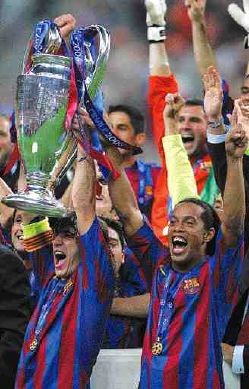
I arrived Wednesday night to much fanfare and welcome -- they were really happy to see me! There was cheering, singing in the streets, fireworks...a teenage girl even ran up to me on the street and threw her arms around me in a long and tight embrace yelling tearfully, "BARCELONA!" I just figured they were all really glad to see me because I had been away for awhile. But then someone told me that Barcelona had just won the European Cup football (soccer) championships -- for like the first time in 14 years. So it was, needless to say, a big freakin' deal in Barcelona and the locals were totally losing their minds.

Unlike American sports when a team wins and fans celebrate in the stadium or in their homes over a six-pack and some high-fives, Europeans (or Spaniards, at least) take to the streets in a major way. Literally, everyone -- thousands of people -- all run into the city streets cheering, singing, setting off fireworks, honking their horns, partying, hanging half-naked out of car windows, waving flags, guzzling beer, holding up makeshift trophies, and of course, hugging complete strangers who just arrived from far-off places.

My hotel was on Las Ramblas, the most famous thoroughfare through Barcelona, so I was in the center of the action where the biggest crowd had gathered. The noise was unbeleivable (all night long), the energy was crazy strong, all the news channels were covering it. I called my mom at one point from my mobile phone in the street so that she could feel part of the action...after I told her of course that it was celebrating she was hearing -- not rioting -- and that I was perfectly safe. (Actually, I read in the paper the next day that there was some rioting, but I must have called it a night before those good times got underway.)

The conference was good for the most part -- I got some new ideas and met some interesting people. It was all about what's new in the world of "buzz" and word of mouth marketing. We spent a lot of time discussing the impact of blogs and other emerging viral communications tactics.

The conference was a block away from the Boqueria -- Barcelona's most famous food market. So I spent my lunch break both days wandering the stalls, enjoying the sights and smells, and sampling the food at some of the many counters set up to feed tourists. There is everything there...fish, meat, fruit, veggies, cheese, nuts, candy, juices, eggs...heaven.

Friday, after the conference ended, I took a stroll through the Gothic Quarter to La Seu, Barcelona's magnificent Gothic cathedral. I couldn't beleive I had missed this on my first visit, until I made my way out to the cloisters, saw the geese and palm trees, and had a flashback and realised I hadn't missed it -- I had gone there before on my first visit but seemingly lost all memory of it. Hmmm...early Alzheimer's perhaps? A little disturbing...but how is one to absorb and remember everything??

After La Seu, I went to Museu d'Historia de la Ciutat (Museum of the City), where I saw artifacts from the old Roman city of Barcino (now Barcelona), then I went a few levels below ground where I actually got to walk through the old Roman city ruins from back in the day. It was really cool and the ruins are so well excavated. There are even the remains of an old Episcopal complex where the bishops lived complete with mosaic floors. What's even cooler is that the old city is located directly below the Placa del Rei, the palace where Ferdinand and Isabella welcomed Columbus back after his triumphant voyage of 1492. I also got to see a few rooms in the Placa del Rei, including the grand, vaulted hall known as the Salo del Tinell.

After the museum, I wandered through an architecture exhibition that I really didn't understand, then I found a few art galleries that I really enjoyed. Next time I go, I am shopping for art -- you can get reasonably priced original works in Barcelona by up-and-coming artists. But I had already blown my shopping budget on a pair of Chanel sunglasses that I had been coveting since Christmas, so maybe art can be for next time -- when I actually have a house/apartment of my own to hang it in and everything.

I ended the evening with a dinner stop at Taller de Tapas -- a yummy restaurant chain in Barcelona. I had a glass of Rioja and some assorted tapas, including ham croquettes, spinach with chick peas and pancetta, and some grilled prawns.

Saturday I stopped for a quick breakfast, then went to Santa Maria del Mar -- another gothic cathedral (more stark and bare than La Seu, but still very beautiful). Then I toured the extremely well-curated Picasso Museum (on a particularly atmospheric street in the Gothic neighbourhood), as well as the Museum of Contemporary Art. The Picasso Museum was very cool, boasting some of his earliest paintings as well as a large collection of his ceramics (I had no idea he did ceramics). They looked a bit like the pottery my neices make in their craft classes, but I guess that just means they have great potential! My favourite part of the museum though was a whimsical portrait he did in honour of his wife Jaqueline, as well as a room dedicated to about 40 paintings he did as a tribute/mockery/study (?) to Velasquez's "Las Meninas" painting. It was fabulous, I could have sat in that room and enjoyed it for another two hours...very fun and unique.

After museum hopping and a bit more browsing down Las Ramblas, I stopped at a cute cafe called Carmelitas where I had a bite to eat and a glass of wine. I kinda zoned out and people-watched for an hour or so and wrote some postcards.

Barcelona is such a warm, friendly, sunny and lively city. I feel a serious love affair with Spain coming on....must get to Madrid and Seville asap. I really think I would love to live there for awhile.

After graduating from college, I went backpacking through Central America with a friend, Barbara Seasholtz. She was half Spanish and I beleived moved to Barcelona soon after our trip. I need to look her up sometime and see if she is still there -- would be neat to see her again.

I had a bit of an irrational fear when I got to Barcelona (not related to the futbol frenzy). Did you see that movie "Memento" where the guy has no short term memory and literally wakes up every day not knowing who he is or what he's doing? He has to write himself notes every minute of the day just to keep his life together. Well, I had a fear that I might wake up one day in some random place in the world and not know who I am or what I am doing and would be totally lost and in trouble -- and that would be awful! So, I wrote down some vital information and put it in my wallet, just in case -- one can never be too safe.

Wednesday, May 17, 2006

Istanbul (formerly Byzantium & Constantinople)

I think I should rename this blog "The Easily Impressed American." I just spent 6 days in Istanbul, Turkey. It was really cool -- like no place I've ever been. (Pictures are on the way...camera battery is charging...)

You might say, "Give me a break! Is everywhere she goes the most awesome place on earth?!" Well, the answer might simply be yes. There are so many cool places and things to see in the world, it blows my little small-town mind. Again and again and again. Sure, some things are better than others, but I can honestly say I haven't gone anywhere yet since being over here that hasn't done something for me. But then again, maybe I'm just easy to please.

The thing about Istanbul is I can't figure the place out. Turkey covers both the Europe and Asian continents (the Bosphorus seperates the two, you can drive a bridge over). It is becoming more and more western (their EU application is in!), but it is 99% Muslim. It was once an outpost and then capital of the Roman Empire, an early seat of Christianity, and later became Muslim. That's a REALLY condensed history that does not do anything justice, but seriously, it has a fascinating backstory -- check it out for yourself. Here's a good link to a brief history if you're interested: www.allaboutturkey.com/istanbul.htm

I was there for work over 6 days and had the opportunity to meet lots of great people in our affiliate office who were all very kind and gracious to me. They also took it upon themselves to show me around the city and host some great evenings out.

I arrived on Wednesday evening and met two of my clients for dinner at the hotel restaraunt (I was staying at the Hyatt Regency in the city center). The highlight was when a woman walked in (with a bit of an entourage) and everyone stopped to take notice. The client told me she is "the Madonna of Turkey" -- an actress, singer, TV host, etc. Her name is Hulya Avsar. So there -- my first Turkish celebrity sighting, and it was a good one! They tell me she is in the papers every day for something.

Thursday for lunch, Gonca (pronounced Gonja), the head of the Istanbul office, took me to lunch at a traditional Turkish restaraunt called Kanaat Lokantasi in the neighbourhood of Uskudar (on the Anatolian/Asian side of Istanbul). It was amazing.....all homeade Turkish deliciousness. There was a huge counter of specialties...cold starters/mezzes, hot dishes, a kitchen counter full of main meals (mostly kabobs) and then a decadent counter of desserts. You just go through, point to what you want and they bring it to your table. I STUFFED myself, but the thing I remember best was the desserts (of course). I had figs stuffed with walnuts and creme, as well as a truly special warm, sweet semolina dessert with toasted almonds (I went so crazy over it, Gonca sent a box of it home with me which I had for breakfast the next morning).

Thursday night after work, my colleague Kadir took me to the trendy neighborhood of Beyoglu. We took a ferry from the office, at sunset, crossing from the Asian to the European side across the Bosphorus -- the sunset was beautiful behind the skyline of mosques, hills and bridges. Once in Beyoglu, we strolled the long pedestrian street full of bazaars, bakeries, shops and resataruants. We stopped and ate at a large, open-air restaraunt in what used to be an old flower bazaar. We had a lovely dinner of mezzes, wine and fresh fish (in Turkey, they just bring out a tray of random, fresh whole fish, you pick which one you want, and they go back and cook it for you.) I was also intrigued with all the food stands on the street cooking up a variety of yummy-smelling things, and colourful fruit stands with fruits I had never heard of before -- my favourite being erik -- which are small, green, tart plums, slightly larger than cherries. After dinner we went to a bakery where I had a very traditional Turkish dessert called Asure -- an applesauce and cereal-type concoction topped with a colourful variety of various nuts and fruit. The story goes that this was Noah's last meal on the Ark -- he basically threw all his little various leftovers into one dish -- and there you have it.

Sorry, but you know it would be no blog of mine if I didn't go on excessively about the food. Newsflash: Turkish cuisine is now officially my favourite. Oh my goodness, all the fresh fish, and yogurt, and mezzes (small salads) and green salads and kabobs....truly an amazing place to eat.

But I DID do more than eat! Friday after work, my colleague, Banu, took me to the waterside village of Ortakoy on the Bosphorus/European side -- a lovely little neighbourhood of cobblestone streets, jewellry and craft stores, restaurants with outdoor seating, and street vendors. We walked around and shopped a little (I bought some sunglasses and a necklace), then had dinner at a cosy little Turkish restaurant called Sazeli. Then we went to another cafe overlooking the water and had dessert as the sun set. There is a gorgeous mosque on the waterfront of Ortakoy called the Mecidiye (built in 1854) which is postcard-perfect, especially as the sun sets. I wont forget walking down the narrow streets, as the call to prayer eminated from the loudspeakers of the mosque, as the city fell quiet and the sun began to set....it was a bit magical and a sensation I haven't quite had before travelling in other places.

Friday night Gonca invited me out with 6 of her friends. We met at a popular fish restaurant called Doga Balik that overlooks the Bosphorus with a stellar view of "the Golden Horn" -- the part of Istanbul called Sultanahmet -- where the Blue Mosque, Hagia Sofia, and Topkapi Palace are. I counted about 7 or 8 mosques illuminated on the Golden Horn across the dark water...it's scenery one does not forget.

It was at the restaurant I dicovered Raki -- a very traditional Turkish liquor made from distilled grapes and anis seed. It is soooo yummy. It is poured in a slender glass about a third full, and the the rest of the glass is filled with water, which turnes the Raki white. Then a few ice cubes are added, and voila -- a great cocktail to be served with food. I brought a bottle back with me to England.

After the restaurant, we went to a very trendy bar/nightclub which was really fun, but we were all kinda tired and didn't stay out too terribly late. I have no idea where we were (Gonca drove), but somewhere near Beyoglu, I think.

Saturday I did some crazy rapid sightseeing in Sultanahmet, where all the main tourist attractions are. My first stop was the Topaki Palace, which houses some pretty extravagent artifacts, including an 86 carat diamond and other assorted gems and jewels (there is also a 56 carat diamond as well). The whole palace is elaborately tiled and boasts beautiful fountains, gardens, and splendid views of the city. The most exquisite part of the palace, however, is the Harem, which you need a separate tour for. This is the most lavish part of the palace and immensely dazzling when it comes to the display of craftmanship and finery inside. Blows the mind...I will post pictures as soon as I can, you really have to see it.

After the palace, I walked over to the Hagia Sofia, which was built as an early Christian cathedral in the Nyzantine era by Justinian I as part of his reign during the late Roman Empire, but was later converted to a mosque when Istanbul became Muslim. So it's now a fusion of Christian and Muslim, and it is truly gorgeous sanctuary. I spent a lot of time inside, and got my "money shot" for this year's Christmas card! There is a gorgeous golden mosaic in the dome over the main alter of Mary and baby Jesus....so I found the right angle and got the shot!

After the Hagia Sofia, I went to the Sultanahmet Mosque, which is also known as the "Blue" Mosque since blue is the predominant colour. It is a spectacle inside and out, and is arguably the most famous and most beautiful mosque in the world. It's dazzling. Facing the Hagia Sofia, it is architecturally one of the prettiest sights I have seen.

After the mosque, I went to the Grand Bazaar, which is the largest covered market in the world. Holy crap. It is literally a small city unto itself boasting leather, lanterns, pottery, antiques, clothing, exotic carpets, food, fabric, and jewellry. It was an exhausting experience (everyone is heckling you as you walk through to come in and buy, it's a bit overwhelming, if not completely annoying!), but I managed to buy a lovely ceramic plate after about 25 minutes of haggling and getting the price down to what I considered reasonable. That was about as much energy as I had, so after purchasing my plate, I made a B-line outta there. It's visually overwhelming too with corridor upon corridor of wares.

After the Bazaar, I stopped in Ortakoy again to walk around some more, then walked around the grounds of the Ciragan Palace -- a beautiful old palace on the water surrounded by gardens (it's now been converted to a luxury hotel and special events venue). I sat on a bench for awhile in the garden on the waterfront and completely zoned out.

Saturday evening, a new friend I made Friday while out with Gonca -- Barbaros -- took me out to dinner in a sweet neighbourhood where there was a street of lively outdoor restaurants (I beleive it was called French Street, as the whole street is themed French). We had a really great dinner on a restaurant rooftop overlooking the street. He was really great to talk with and a very gracious host. After dinner, we went dancing at a fun club that played American pop music from the 80s. That was kind of fun. :)

Sunday I was really too tired to do much (I really did work pretty hard Thursday and Friday, and had two more days of work ahead of me). I walked around the neighbourhood my hotel was in and did a little browsing around Taksim Square (bought some Turkish Delight for the co-workers back in London). Then I fell asleep for about 2 hours, did some more work then went back to bed. I'm so exciting, huh?

Monday and Tuesday were busy days at work, although I did manage to get out for dinner again with Barbaros Monday evening in the neighbourhood of Kalam. The restaurant was outdoors at a lovely marina, and there were even fireworks that went off over the water as we ate. I love fireworks. We had about 6 salads/mezzes to start, then shared a whole fresh fish which they grilled on skewers with veggies. And we had more Raki, of course. :)

Oh, and one last food note: Turkish coffee and Turkish tea. Turks drink them all day long -- as did I -- the office kept me very well hydrated with both. It's a very serious ritual and addiction at it's best! I now want my own set of Turkish tea glasses (the tea is steeped in metal pots, so it has a bit of a metallic taste, which I quite like...reminds me a bit of the water at my Grams house that has an "essence" of iron).

I left on Tuesday evening. I still missed so much though -- most notably the Spice Market, the Jewish Quarter and the Galata Tower. So I must go back, that's a given -- Istanbul is truly a world unto itself.

Sunday, May 14, 2006

Happy Mother's Day (especially to MaMa, Elizzy & Grams)! Here's a Little Poem.


I didn’t know her then,
but her gaze still held
that familiar smile
and sweet affection
I’ve come to know

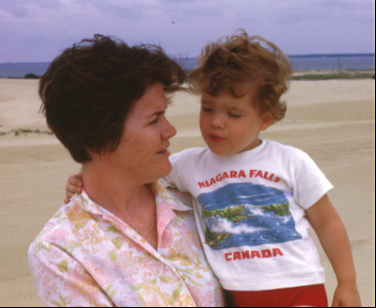
She holds my sister, on a beach
cheek to cheek
in soft sunlight
What a pair they were,
mutual admiration and warm connection

I’d like to have known her then,
to hear her voice and love her style
It’s sweet to discover her in that time,
younger than I am now
with a different point of view

But in this moment we seem to meet
It makes me smile just to know
that she will love me too,
that I will join their club
and forever belong


--Catherine Nalls Franklin--

Tuesday, April 18, 2006

Auschwitz & Birkenau: Why Faith Matters

While in Poland, I had the chance to tour Auschwitz & Birkenau (also known as Auschwitz II) -- the most notorious of Nazi death camps. Both camps are located in the town of Oswiecim, about an hour drive from Krakow.

When you look at a map, you see why Auschwitz was chosen as the heart of the “final solution” – it was a central location in Europe where Hitler could conveniently and systematically deport victims from all corners of Europe – specifically, from the Nazi-created Jewish ghettos that stretched across the continent. Hitler crafted a complex transport network for the exclusive purpose of sending innocent people to be murdered. Some had to purchase their own tickets.

Auschwitz grew to encompass three large camps and 40 sub-camps -- all put in place mainly for the purpose of exterminating as many Jews as possible. The overall number of victims of Auschwitz in the years 1940-1945 is estimated at between 1,100,000 and 1,500,000 people. The majority of them were Jews who began arriving in 1942. Most of them were murdered immediately upon arrival in the gas chambers. Those who were spared were handed over for slave labour….and many still died of starvation, illness, disease or execution.

Though they were the vast majority, Jews weren’t the only victims – prior to 1942, Auschwitz I was primarily a prison camp for Poles (about 140,000), Gypsies (about 20,000, mostly from Russia), and POWs from across Europe (20,000).

For more background and information about Auschwitz and its history, you can visit the website of the Auschwitz memorial and museum at www.auschwitz-muzeum.oswiecim.pl. It’s a very poignant website and worth a look.

Our visit lasted most the day and was an extremely heavy experience, to say the least.

We started by watching a short film featuring footage taken at the time of the camp’s liberation in 1945.

Next, we toured the main camp, Auschwitz I, which took about 3 hours. Here we saw several prisoners’ quarters which now house powerful displays with remnants from the camp and photos. Many of these rooms were so emotionally overwhelming that it was hard to stay inside for too long -- there is still a palpable, human energy that is ever-present indoors and out. Like any place with a history of such dense humanity (and inhumanity), the residue of what transpired can not be erased...maybe the people are gone, but their souls leave something behind, making me think a little harder and make a connection with the reality of the human toll.

It can be difficult to grasp the quantity of people who were imprisoned and killed at Auschwitz, but when I saw the vast glass display cases filled with piles of items that had been confiscated from prisoners, it was an instant visual quantification of just how many lives were hanging in the balance. It was perhaps the most overwhelming part for me. There were thousands of suitcases belonging to people who thought there was a reason to pack. There were unsettling piles of human hair, some with braids still intact (the hair from murdered female prisoners was cut and sent to German textile factories to make fabric used for military uniforms, etc.). There were large tangles of wire-rimmed eye glasses. There were thousands upon thousands upon thousands of shoes (you can see the variety of prisoner origins by all the shoes…there were a pair of wooden shoes that really stood out, not to mention the case of children’s shoes.) There was a large case of prosthetics and aids for the disabled that had been taken…artificial limbs, crutches, canes, wheelchairs. There was also a tractor trailer’s worth of pots and pans -- prisoners were told they were simply being moved to set up homes in another place, so they brought their most needed possessions, such as cookware. There were also cases of Jewish prayer shawls that had been taken, samples of prisoner uniforms (which were certainly not substantial against Poland’s frigid weather), and a selection of many other personal mementos stripped from victims.

A particularly staggering statistic is that 200,000 children came through the gates of Auschwitz, but only 600 came out. And the majority of them were spared only to be the subjects of cruel and inhumane medical experiments. These children were stripped of their names and given numbers. Adult prisoners were also subjected to these medical experiments as well.

We walked through the dark and dreadful basement passageways of Block 11, which is where the worst forms of torture took place, as well as many prisoner executions. There is a firing wall that was rebuilt outside in the courtyard between Blocks 10 and 11 as a memorial. By the end of this part of the tour, the group was completely silent, no one could utter a word.

The last stop at Auschwitz I was inside a gas chamber and crematorium.

Next, we took a shuttle bus to the camp of Birkenau (Auschwitz II), about a mile away and much bigger than Auschwitz I. This was literally “the end of the line” for most that arrived. Empty train tracks still run through the main brick gate, leading down a stretch of long, (now) green field and ending at the ruins of two massive gas chambers and crematoriums. On one side of the tracks still stand the chimneys of what used to be soldiers quarters (the Nazis tried to blow up the camp upon leaving to hide their crimes, but the chimneys still stand, as well as the ruins of the gas chambers), and on the other side are the buildings where prisoners lived. We went inside one of them and it was truly gut-wrenching. Up to 700 people were crammed into a space not fit for animals – a space permeated by cold, filth, mud, wetness and disease. And these structures are just meters away from the gas chambers and crematoriums where crowds of people walked to their deaths every day. A massive memorial has been constructed at the end of the train tracks, in the space between the two gas chamber ruins.

I know this has been more than enough detail for most, but it’s what I saw and it’s important for me to recount it and share it. It’s the reality of a situation no one should forget.

I was really impressed with the tour guides – ours was very direct and matter-of-fact, not putting any spin or bias on the facts she was giving or the stories she was telling. And it should be told for the horrendous and gruesome thing it was, it does no one any service by lessening the magnitude and evil of all that occurred there. There were a lot of stories and facts that our guide repeated over and over and over again. At one point I wondered if that was on purpose or completely necessary…but I sure didn’t forget anything she said.

So, back to why faith matters. Perhaps it’s a no-brainer. But put in the most simple and human of contexts, I couldn’t help but imagine being sent to Auschwitz myself, at any age or time, with my family (or perhaps being separated from them). I imagined my mom, dad, sister, baby nieces, grandmother -- everyone I love being rounded up and sent there. I thought about all our earthly possessions being taken from us and no attention being paid to any sickness, injuries or problems any of us may have had. I thought about not being able to help or save or do anything – to have the power taken away from me to take care of and protect those I love. I thought about watching people die around me every day -- or surviving, but in the very worst of conditions and circumstances. It’s obviously a grim and horrible thought, I know (maybe there is something wrong with me) -- but I couldn’t help it, I couldn’t stop thinking about it and making it personal. I was thinking about it constantly during the tour, trying not to burst out crying as I conjured up horrible images of the things I was hearing happening to members of my family. But I think people need to think of it in these personal terms sometimes, maybe so that we can remember that everyone is human and so that we will NEVER be part of supporting anything like it or turning a blind eye to it.

Of course, I say this knowing all too well that there are still very similar and horrific genocides still happening in our world. Between April and June 1994, an estimated 800,000 Rwandans were killed in the space of 100 days. There was Bosnia. And the Sudan. And Sierra Leone. I now spend a lot of time thinking about these things too, as they represent the same unfathomable loss, sadness and evil as the Holocaust. I try and figure out what I might be able to do to help. But just the simple awareness is so important, because many people in the world are just not even aware, or choose not to be.

But back to the point (I think) I’m trying to make here. When everything is taken from you and you have nothing, not even the most basic things and abilities we take for granted every day and you are at the mercy of others with dark hearts -- what do you do? There is only one thing you have left, and that's your faith. In God (however you define/name God). I hear people say in bad situations (or in reference to atrocities like the Holocaust) that they have given up on God and stopped believing, because how could there be a God who would let these things happen? But I don’t believe it is God who does these things or allows them to happen. It is human doing. I believe God operates in various ways in the human realm, but humans have been given the ability to govern ourselves, which means deciding if we help or hurt the people around us. The way I saw it as I walked the fields of Auschwitz, thank God the prisoners/victims had their faith (or at least I hope they had it, despite the fact it's what put them there), because it was the one thing that could not be taken away from them, no matter what. It was the only thing that could likely provide any peace or assurance or bit of solace they could take comfort in, even if it had to be kept to themselves in their heads and hearts. Faith is the one thing that lasts forever, long after everything else is gone. Without their faith, they would truly have had nothing to hold onto. Any one of us can have everything taken from us at any time, under any number of circumstances out of our control. And while we certainly do not need to dwell on this or fret it every day, it is more important to me than ever now to make sure that I always have my faith (kind of like an American Express card..."don't leave home without it.") And my visit to Auschwitz has made me want to strengthen it and figure it out and make it a truly meaningful part of my life. Faith, in whatever form, is everything. Auschwitz made that crystal clear to me. The parameters, definition and rules of it no one person or religion or church can define. But having it is absolutely essential. It was the Nazis who lost, full stop -- certainly not the Jews, because their faith still lives on. And thank God for that a million times over. That in itself makes me hopeful and even more faithful. I may sounds like a fanatic, or just plain naive and cliche. But this is what I take away from my visit, and I'll never forget it.

***

The promotions for the movie “The Motorcycle Diaries” featured a tagline that said “Let the world change you and you can change the world” (it is a great movie – I recommend renting it if you haven’t seen it already). It is a line that has stuck in my head, especially over the past 8 months seeing so many new things. I truly feel so blessed and grateful for the opportunities I have been afforded (throughout my life) to see different parts of the world and meet so many different types of people. And the more I see, the hungrier I am for more. So, I quite willingly let the world change me -- and on the journey, with a little (or maybe a lot) of faith, I hope that I can give it something back in return. Not quite sure what that it yet, but I’m sure I will figure it out.

Now I will rush to get my next post up so that we can get back to happier subjects... :)


The chimneys that remain from soldier housing at Birkenau


Suitcases taken from prisoners


Shoes from victims


Auschwitz I

Prisoners' quarters at Birkenau

End of the tracks at Birkenau

Monday, April 17, 2006

Easter in Poland

I spent the long Easter weekend in Krakow, Poland with my friends Lisa, Kim and Margot...it was a fantastic and memorable holiday.

In Search of my Inner Polish Jew
Why Poland, you ask? Well, Lisa and Margot both come from Jewish Polish families. My grandmother (Dad's mom) was a Polish Jew. So, we were all pretty curious to visit and see what Poland is like. Lisa is not Polish, but hey, it was an equal opportunity visit -- not entirely a hertiage journey. ;) Actually, it turned into a true multi-faith holiday. We went to Catholic mass (none of us are Catholic), toured synogogues, and talked a whole lotta religion....it's kind of hard not to do that there.

Krakow
Krakow is truly a beautiful city. I think I might have been expecting something darker and gloomier, but the wide cobblestone streets lined with broad, pastel-coloured buildings and varied architecture make it feel light and lovely. The city was seemingly spared from the destruction of WWII and Soviets -- unlike Warsaw (from what I hear). It is a small, clean city and completely walkable...very comfortable to see in a long weekend. Margot and I stayed at the very nice, modern Radisson; and Kim and Lisa stayed at an older hotel called the Amadeus. Both were centrally located and offered nice amenities. We had a full breakfast included with our stay each morning which was a bit of a treat.

All city views are dominated by Wawel Hill, which boasts a glorious cathedral and castle -- both in meticulous contindition. There are a few nice parks scattered around which are green and clean. The market square in the city center is actually the largest in Europe -- it is great for sitting outside at one of the many cafes to people-watch while enjoying a glass of wine (we know this from experience).

We found the people in Krakow to be extremely friendly. The food was also really, really yummy....we never had a bad meal. Easter evening, we ended up at a pizza restaraunt which may have been some of the best pizza I've had, New York included! The first night, we tried a traditional beetroot soup (usually served with meat dumplings in it) which was pretty tasty and quite filling.
I didn't find Krakow to be too annoyingly touristy either -- it seems to be a bit of a best-kept secret (though travel buffs are now dubbing it "the new Prague") .... hopefully it will stay somewhat quiet and retain its charm. Oh, and the exchange rate is great...Poland is still on their own currency, the Zloty (or "Shlotzki" as I kept calling it) and it is one of the few travel bargains left in Europe at 1 Zloty per .32 cents USD.


The Wieliczka Salt Mine
(or "Middle Earth," as I call it)
After arriving on Friday afternoon, Margot and I took a tour of the Wieliczka Salt Mine, about a half hour from Krakow. The mine is/was one of the world's 8 wonders (I thought there were only 7, but whatever) and has been designated a UNESCO World Heritage Site. What this means is that the place is REALLY, REALLY BIG.

J.R. Tolkien visited the mine once and it inspired him to model a few scenes in "The Lord of the Rings" series after it. So that should paint a good picture for you of what it's like.

The mine has been worked for 900 years, and was at one time one of the world's biggest and most profitable industrial establishments. It was, at a certain point in Poland's history, responsible for a third of the country's economic revenue.

Nine centuries of mining in Wieliczka produced a total of 200 kilometers of passages as well as 2,040 caverns of varied size. The tourist route starts 64 m deep and ends 135 m below ground. In the depths, there are several chapels; a giant ballroom-like space where concerts, weddings and events are held (complete with a salt rendition of DaVinci's "The Last Supper"); small salt-water lakes/ponds; tons of elaborate sculptures and chandeliers all made out of salt; mineshafts; a mining museum; a bar and restaurant; and a sanatorium (still in use) for people suffering from asthma and allergies -- this is becuase the air down in the mine is perfectly pure and temperate-not too cold, hot, dry or humid. Wild, huh?

While I never felt clausterphobic or panicked while below (the place is just too huge), there were a few scary touches that I tried not to dwell on. Like the creepy fake people positioned throughout the caves to help illustrate life in the mines (some of them moved). It was like a low-budget "Pirates of the Carribean" ride at Disney gone horribly wrong. There was also a cave where sculptures of the Seven Dwarfs had been positioned (although some of them looked like the yard gnome from the Expedia ads). And they were all illuminated by flashing, different coloured lights aglow under the stalagmites. Our guide said, "This is for the kids!" but I found it to be something out of a demented nightmare and actually had to look away out of fear the dwarfs would come to life and kill me. But then again, I used to have horrid nightmares from watching "The Wizard of Oz" (that movie still sends a shiver down my spine....ugh!)

The final scary moment was the elevator thrill-ride back to the surface (if "elevator" is what you call the seemingly unstable, dark and drafty box the size of my NYC closet that took us back up). All I remember is being crammed into darkness with a lot of other people, and then grabbing onto Margot for dear life when I thought we were about to freefall. But other than that, it was all good, a VERY interesting tour!

Oh, and our tourguide was a hoot (I took her picture. Completely nerdy of me, but I couldn't help myself) -- very funny and entertaining. I noticed all the guides are very fit, which is no surprise considering all the walking they do every day!

Eating my Way Through the Easter Market (the picture to the left is a table of cheeses!)
Near the city square, there was an Easter market set up with lots of food stalls (most notably polish sausages, saurkraut, cheese and perogies); traditional Polish ceramics (I bought a vase and a bowl), painted wooden Easter eggs (bought lots of them too, as well as some ceramic eggs -- I really am turning into my Grandmother); and varied Easter crafts. While shopping, I sampled some of the hot string cheeses (available in a pretty array of forms and shapes) and some perogies stuffed with mushrooms and cabbage.

Holy Saturday and the Polish Easter Basket Tradition
I read about a wonderful Polish Easter tradition that I got to see first hand...it is really special. Actually, it is a tradition that (I assume) the Easter Basket comes from! On Holy Saturday, everyone brings a basket to their church filled with symbolic Easter foods, including meats, cheese, cake, horseradish, bread, eggs, salt, and a lamb made of sugar or butter. The baskets are decorated with ribbons and sprigs of greenery. The priest blesses the food/baskets and the foods are eaten on Easter day. (You can read more about it at http://www.phcwi-madison.org/tradition.htm)

So, as we were driving out to Auschwitz on Saturday, we passed lots of people throughout a few rural areas walking down the road to their churches -- men, women, teens, children and babies in strollers...all walking to their churches with their baskets in hand. It was so sweet! I can't wait to adopt the tradition myself and create Polish Easter baskets for friends and family next year!

Another tradition is to decorate the graveyards -- we passed a church with a lavishly-decorated graveyard, decked out in flowers galore. I think that's really nice too!

Auschwitz-Birkenau
See my (upcoming) separate blog posting on our tour of Auschwitz and Birkenau...it warrants it's own story.

Kazimierz
We also spent a lot of time in Kazimierz, the old Jewish Quarter of Krakow (which actually used to be considered a separate city all together). At one time, Kazimierz was a major cultural center for Jews in Europe, drawing people from all over the world. Sadly enough, there are now only about 140 Jews left in Krakow. Can you beleive that?! But the neighbourhood is extrememly rich with history and you can still feel the energy that makes it so culturally special and a reminder of Krakow's colourful past.

The neighborhood is still very cool and a nice place to spend time wandering around, with lots of Jewish (and other) restaurants and some newer hip bars. One of the bars we stopped into there is called "Singer," with old, antique Singer sewing machines on all the tables. A very dark, cool and smoky place with a packed house and loud music....very cool vibe. We also visited an old beautiful Jewish cemetary, and a couple notable synagogues -- the "Old Synogogue" being the largest in Poland and the third largest in Europe...it is now an impressive Jewish museum, which we toured on Monday before leaving.

For anyone who has seen the movie "Schindler's List," many scenes were shot in Kazimierz since the neighbourhood has not changed much since the 1940s. Oskar Schindler's factory was located nearby in the Zablocie district of Krakow. His factory was considered a Nazi sub-camp, but became a haven for many Jews -- sparing them from the nearby gas chambers of Auschwitz. Many scenes from the film were actually shot in the town. The factory is still standing today, although we did not have enough time to take a look. It is soon going to be converted into an art museum.

Mass at Wawel Cathedral
On Easter Sunday, we all went up to Wawel Cathedral to attend Easter mass. The church was packed. We caught the very end of the high mass, and then sat through a shorter mass that followed without music. It was entirely in Polish, so we didn't understand anything being said, but there were certain prayers that Lisa and I (the two Christians of the group) were able to make out -- the peace, baptismal prayers, and the Lord's Prayer (we think). The cathedral is beautiful, but I must say those marble floors are very hard to kneel on with no cushions -- hard core those Polish Catholics! ;)

The Cloth Hall and My Sweet New Nativity Set!
In the middle of the city's market square, there is a giant yellow building called the Cloth Hall that is dubbed "The oldest shopping mall in Europe." Inside, there are varoious stalls selling crafts, trinkets and souveneirs. Lisa and I were both taken in by natural, hand-carved wooden nativity sets we found, so we each bought one. They are so sweet -- I'm in love with mine and can't wait to display it next Christmas! It will no doubt always be attached with special memories of Poland each year when I set it up. I also bought a lovely necklace with green, jade-like stones in it....the exchange rate really made shopping a treat.

Final Thoughts...
Between being a hard-hit victim of WWII and the breakaway from the Soviets, Poland is a country that has seen terrible hardship and destruction. But it has so much to offer, even as it struggles to rebuild its identity. I loved it there and can't wait to see other parts -- it's a special place.


More Pictures...


The bimah (and the ark) inside the Old Synagogue in Kazimierz....now a Jewish Museum.


Old graves (now converted into a wall) in the Jewish cemetary in Kazimierz.


The ballroom (and salt chandeliers) inside the salt mine.


Me and the girls (Lisa, Kim and Margot) enjoying sunshine and wine in the Market Square.


Crafts inside the Cloth Hall.

Monday, April 03, 2006

Cookie Does London (and Paris on the side)

So, in keeping with my highly delayed and backlogged posting habit, here are some pictures from Jeff's (or Cookie, as I like to call him) visit to London in early March. We did all sorts of fun touristy things that I haven't gotten to do since coming to England: We toured the War Cabinet Rooms and the Winston Churchill Museum (WAY cool, I had no idea about the whole War Cabinet Room thing), we went to Greenwich and strattled the Prime Meridian (and I learned just what exactly it is....I missed that in fifth grade geography), we toured the Cutty Sark (also in Greenwich), toasted at Vertigo (a champagne bar atop Tower 42 in the city), ate at Jamie Oliver's "Fifteen" restaraunt, and toured the recreated Shakespeare Globe theatre (with an impossibly boring tour guide who was so dull she was hysterical). We even went shopping and Jeff let me pick out a few shirts for him at Ted Baker that I know he never would have agreed to on his own. They are probably in the bin for Arizona Goodwill as we speak (damn, I should have gotten a picture when I had the chance). Shopping for boys is sooooo fun.

We also took a side trip to Paris for a day and a night....I had to go last minute for work, so Jeff came along. He is so agreeable. ;)

The weather was horrible the entire time (not that you can tell from these pictures when the fickle English sun did come out for 5 seconds), but we made the best of it!

Here are some pictures....
1)At Vertigo champagne bar, 42 floors up (but it was not as blurry as this picture)
2)The Eiffel Tower being sparkly during our rainy nighttime walk
3)Jeff impersonates a figurehead in the Cutty Sark
4)St. Paul's Cathedral peeps over the Blackfriars Bridge
5)Jeff and I separated by East and West at the Prime Meridian in Greenwich
6)Me at Shakespeare's (recreated) Globe Theatre
7)Cookie at the Blackfriar's Pub....VERY "monastary chic" and cool